
The operational realities of trade regulations, import restrictions and border policies are no longer occasional disruptions for Nigerian businesses. Instead, these policy shifts have become a permanent operating condition, altering the business landscape so frequently that corporate strategies designed at the start of the year can become obsolete within a single quarter.
Governments worldwide use tariffs, trade restrictions and border controls to protect domestic industries. This remains a legitimate economic strategy, and Nigeria has valid reasons to pursue reduced import dependence alongside increased local production.
Key Takeaways
- Targeted Trade Restrictions: The April 2026 import regulation covers 17 categories, including a near-total restriction on pharmaceutical imports, creating simultaneous opportunities and disruptions within affected sectors.
- Foreign Exchange Policy Vulnerability: The historical eight-year foreign exchange restriction on 43 items demonstrates how a sudden policy reversal can fundamentally alter a firm’s cost structure overnight.
- Border Closures and Market Dynamics: The 2019 to 2020 land border closure fell short of its objective to eliminate smuggling, while causing prolonged challenges for small and medium enterprises.
- Asymmetric Risk for Small Firms: Across all regulatory adjustments, smaller enterprises lacking supply chain flexibility or cash buffers consistently bear the highest operational burdens.
The 2026 Import Restrictions: Operational Realities
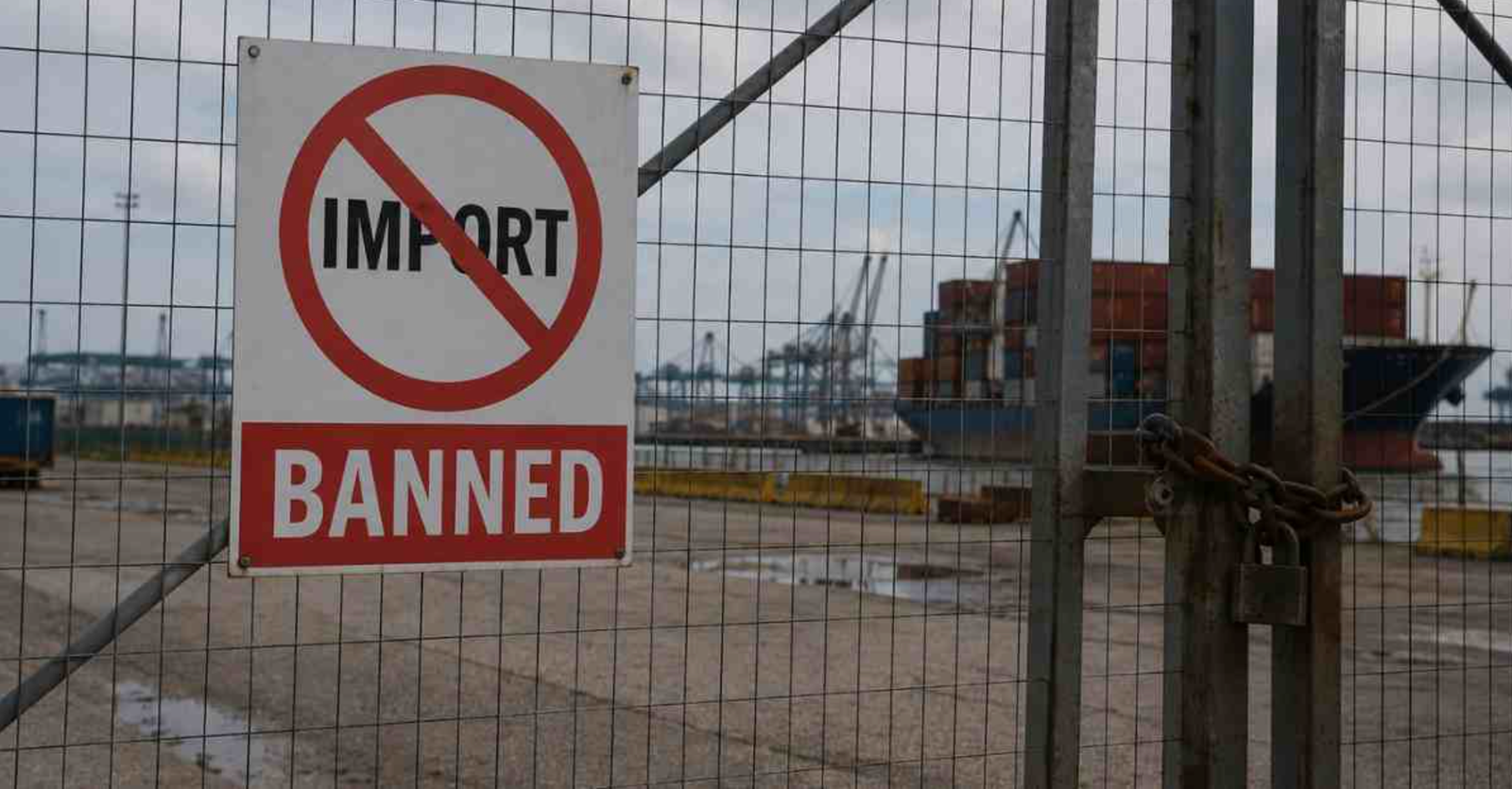
In April 2026, the Federal Government, through the Ministry of Finance, released a revised import prohibition list restricting 17 major categories of goods from entering the country. The stated objectives include strengthening local industries, conserving foreign exchange reserves and reducing dependence on foreign consumer and industrial products. Specific focus was placed on accelerating domestic output in poultry, vegetable oil processing, sugar refining and pharmaceutical manufacturing.
The pharmaceutical sector provides a clear example of how trade restrictions create opposing outcomes within the same ecosystem. A wide array of commonly utilized medicines, classified under Harmonised System Codes 3003.10.00.00 to 3004.90.90.00, faces a total import ban.
For domestic pharmaceutical manufacturers, this policy eliminates direct foreign competition. Conversely, for pharmacies, wholesale distributors and patients relying on specific imported formulations, it introduces immediate supply disruptions, presenting a public health risk if local production cannot scale rapidly to meet demand.
| April 2026 Import Framework | Detail |
| Banned Categories | 17 major product classifications |
| Targeted Sectors | Poultry, vegetable oil, sugar refining, pharmaceuticals |
| Affected Pharmaceutical Codes | HS Codes 3003.10.00.00 to 3004.90.90.00 |
| Abuja Enforcement Action (May 2026) | ₦1.8 billion in counterfeit goods seized by NAFDAC |
| Affected Value Chain Actors | Importers, freight forwarders, clearing agents, domestic manufacturers |
The seizure and destruction of ₦1.8 billion in counterfeit goods by NAFDAC in Abuja during May 2026 highlights a critical market dynamic. Restricting legitimate imports does not suppress consumer demand; it merely removes the formal supply channel, which often invites counterfeit or substandard alternatives. Consequently, entrepreneurs in protected sectors must rapidly scale up legitimate local production before illicit actors capture the market gap.
Digital Compliance as an Operational Risk
Alongside physical restrictions, 2026 introduced full enforcement of digital-only import documentation. All trade filings must now be processed electronically via the NICIS II platform, eliminating physical submissions entirely.
Furthermore, the launch of the National Single Window Platform in March 2026 aimed to integrate the Nigeria Customs Service, NAFDAC, the Standards Organisation of Nigeria and the Central Bank of Nigeria into a single interface. While designed to streamline trade operations by replacing separate agency platforms, the transition has created short-term bottlenecks.
The government was forced to issue an emergency dispensation extending expired NAFDAC licenses to maintain Form M functionality. This occurred because importers faced severe difficulties validating and renewing documentation on the newer B’Odogwu platform following the decommissioning of legacy NICIS II components.
Form M remains the core regulatory requirement in this framework. It is a mandatory foreign exchange instrument required for any import valued above $1,000, valid for six months for general goods and twelve months for machinery. Without proper execution of this document, cargo cannot clear Nigerian ports, meaning any administrative delay or technical error during the digital transition risks immediate cargo seizure.
Foreign Exchange Regulations: A Decade of Adjustments
While import bans dominate current headlines, foreign exchange access remains a long-term structural challenge for Nigerian corporations. In June 2015, the central bank disqualified 41 product categories from accessing foreign exchange at the official window, later expanding the list to 43 categories. This covered items ranging from refined vegetable oils and sugar to specialized industrial inputs.
Affected businesses were not legally barred from importing these items, but were forced to source capital from the parallel market at significantly higher rates, escalating production costs for eight years.
In October 2023, the apex bank completely reversed this restriction, granting firms importing these 43 categories immediate access to official market rates. For companies relying on these specific raw materials, the sudden policy shift substantially lowered landed costs, restoring profitability to previously unviable product lines.
Prior to the reversal, the Manufacturers Association of Nigeria reported that 200 of its members suffered severe operational stress, as many of the restricted items lacked viable domestic substitutes.
Compliance structures have tightened further. The Fourth Edition Foreign Exchange Manual introduces a ₦100 million penalty for commercial banks processing foreign exchange transactions without flawless documentation. Importers face escalating sanctions for non-compliance, starting with a 90-day foreign exchange access suspension for a first infraction, rising to 180 days for a second, 360 days for a third and complete prohibition for a fourth. This progressive penalty structure means administrative errors can entirely cut off a firm’s access to foreign currency.
The Land Border Closure: Structural Implications
The August 2019 land border closure remains an important reference point for studying the broader economic effects of trade interventions. Nigeria completely closed its land borders with Benin, Niger, Chad and Cameroon to halt the smuggling of rice and subsidized petroleum products.
The immediate domestic consequence was an inflationary spike, with consumer inflation rising to 11.24% in September 2019, driven by acute shortages in staple foods and textiles.
The border remained closed for over a year, with a partial reopening for pedestrians and light vehicles announced in December 2020. However, the intervention largely failed to achieve its primary objective of halting illicit trade, as alternative smuggling routes emerged rapidly across the 780-kilometer border with Benin.
| 2019 to 2020 Land Border Closure | Economic Impact |
| Impacted Frontiers | Benin, Niger, Chad, Cameroon |
| Duration of Closure | 16 months before partial reopening |
| Inflationary Spike (Sept 2019) | Consumer inflation reached 11.24% |
| Geographic Vulnerability | 780+ km porous border with Benin |
| Primary Economic Casualty | Small and medium enterprises |
Field research conducted among traders in major markets within Ibadan during the closure period revealed significant supply chain disruptions. Retailers were forced to pivot toward costlier alternative supply chains to keep operations running. Empirical data confirms that while the closure temporarily boosted government customs revenue, the long-term economic damage fell squarely on small and medium enterprises rather than large-scale illicit trading cartels.
Navigating Export Regulations and Capital Repatriation
While import and border policies attract significant attention, non-oil and oil exporters face stringent regulatory frameworks that carry heavy financial penalties for non-compliance. Non-oil exporters must repatriate all export proceeds into a domestic foreign currency account within 180 days of the bill of lading date, while oil and gas exports face a stricter 90-day repatriation window. The central bank actively monitors authorized dealer banks to enforce these deadlines, making timely capital repatriation a critical operational requirement for every shipment.
The revised Fourth Edition Foreign Exchange Manual eliminated processing fees for Form NXP, which exporters must secure before shipping cargo out of Nigeria. However, the same manual expanded regulatory oversight over service exports, non-commercial shipments, cross-border remittances, insurance payments and international investment transactions. As a result, the total regulatory compliance burden for exporters continues to grow, requiring ongoing administrative oversight.
Balancing Policy Protection with Commercial Viability
Import bans are often implemented to protect local industries, lower reliance on foreign goods, preserve external reserves and stimulate domestic output. When foreign items are restricted, domestic firms are expected to capture the market share, generating employment and domestic economic value.
However, the broader market reality is rarely straightforward. Trade restrictions create divergent outcomes across different sectors, extending far beyond the firms engaged in direct importation. While specific local manufacturers benefit from reduced competition, other businesses face higher raw material costs and fractured supply networks.
Targeted trade restrictions can drive expansion for domestic producers by creating instant market demand. For forward-looking corporations, this environment offers strategic opportunities to expand production capacity, launch domestic alternatives, penetrate markets previously dominated by foreign brands and invest in vertically integrated manufacturing.
Historical data indicates that localized industries can scale successfully under targeted protection, provided domestic firms possess the underlying capacity to meet demand. If local producers cannot fulfill market requirements regarding quality, volume or pricing, immediate shortages occur, leading to higher costs for consumers.
Many manufacturers, food processors and pharmaceutical entities depend heavily on foreign machinery, specialized components and raw industrial inputs that lack local alternatives. When access to these inputs is restricted, firms encounter distinct structural challenges:
- Escalating Input Costs: Leading directly to compressed profit margins.
- Supply Deficits: Causing significant production delays.
- Restricted Material Access: Leading to potential declines in product quality.
- Extended Sourcing Timelines: Missing key consumer delivery deadlines.
- Increased Logistics Expenses: Forcing higher retail pricing for end consumers.
Furthermore, trade protection alone does not automate industrial efficiency, innovation or competitiveness. Sustainable industrial growth requires long-term investments in infrastructure, stable power, advanced technology, skilled labor, affordable credit and a favorable regulatory environment. Without these foundational elements, prolonged protectionism can inadvertently lower the incentive for domestic firms to innovate, meaning policy should focus on building enterprises capable of competing in both domestic and international markets.
Identifiable Policy Patterns and Risk Mitigation
Analyzing import restrictions, border closures and export compliance frameworks reveals clear operational patterns that firms can use to inform their strategic planning:
- Divergence Between Intended Policy and Market Outcomes: The 2019 border closure aimed to eliminate smuggling, yet informal trade routes adapted rapidly. Corporate leaders should judge policies by their practical market impacts rather than their official justifications.
- Lagging Enforcement Infrastructure: Major platforms like the National Single Window Platform launched with clear intent, but initial technical bottlenecks forced emergency regulatory adjustments, showing that infrastructure often lags behind policy rollouts.
- Sudden Regulatory Reversals: The eight-year foreign exchange restriction was dissolved in a single circular, demonstrating that regulatory frameworks can change with minimal notice.
- Disproportionate Risk for Smaller Enterprises: Industry data shows that small and medium enterprises consistently bear the highest compliance and adjustment costs during sudden policy shifts.
To build operational resilience against future trade and border adjustments, corporate organizations can integrate several defensive practices into their risk management frameworks:
- Sourcing Diversification: Relying on a single import category or trading corridor leaves a firm highly vulnerable to sudden regulatory changes.
- Active Compliance Management: Form M validity periods, regulatory license renewals and clearance documentation require continuous internal oversight rather than periodic reviews.
- Dedicated Financial Buffers: Maintaining cash reserves tailored for regulatory cost shocks helps firms absorb sudden changes in foreign exchange access or tariff adjustments.
- Monitoring Industry Signals: Major regulatory shifts are frequently preceded by ministerial statements, trade consultations and sector-specific policy briefs.
- Strategic Import Substitution: Firms should actively assess whether their production lines can pivot to replace the foreign goods targeted by import bans.
Strategic Next Steps for Business Leaders
An audit of supply chain vulnerabilities should be conducted to determine if a single regulatory shift could disrupt over a third of a firm’s input access. Establishing a dedicated compliance calendar helps track critical documentation lifecycles, including Form M expirations and capital repatriation windows.
Engaging with relevant industry unions and trade chambers provides early visibility into upcoming policy discussions. Furthermore, integrating regulatory shock scenarios into financial forecasting allows firms to stress-test their liquidity against potential changes in foreign exchange access.
Finally, maintaining flexibility within supplier agreements allows organizations to adjust operations quickly as trade policies evolve. Rather than attempting to predict every regulatory shift, the most resilient enterprises focus on building operational structures agile enough to adapt regardless of how the regulatory environment changes.
Conclusion
Import restrictions, export protocols and border interventions will remain prominent fixtures of the economic landscape, driven by legitimate developmental goals. However, the execution of these policies can introduce short-term instability, and small to medium enterprises often face the highest operational burdens during transitions. The businesses that thrive in this environment are those that prioritize structural flexibility, ensuring their survival does not depend on a single regulatory framework remaining permanent.