

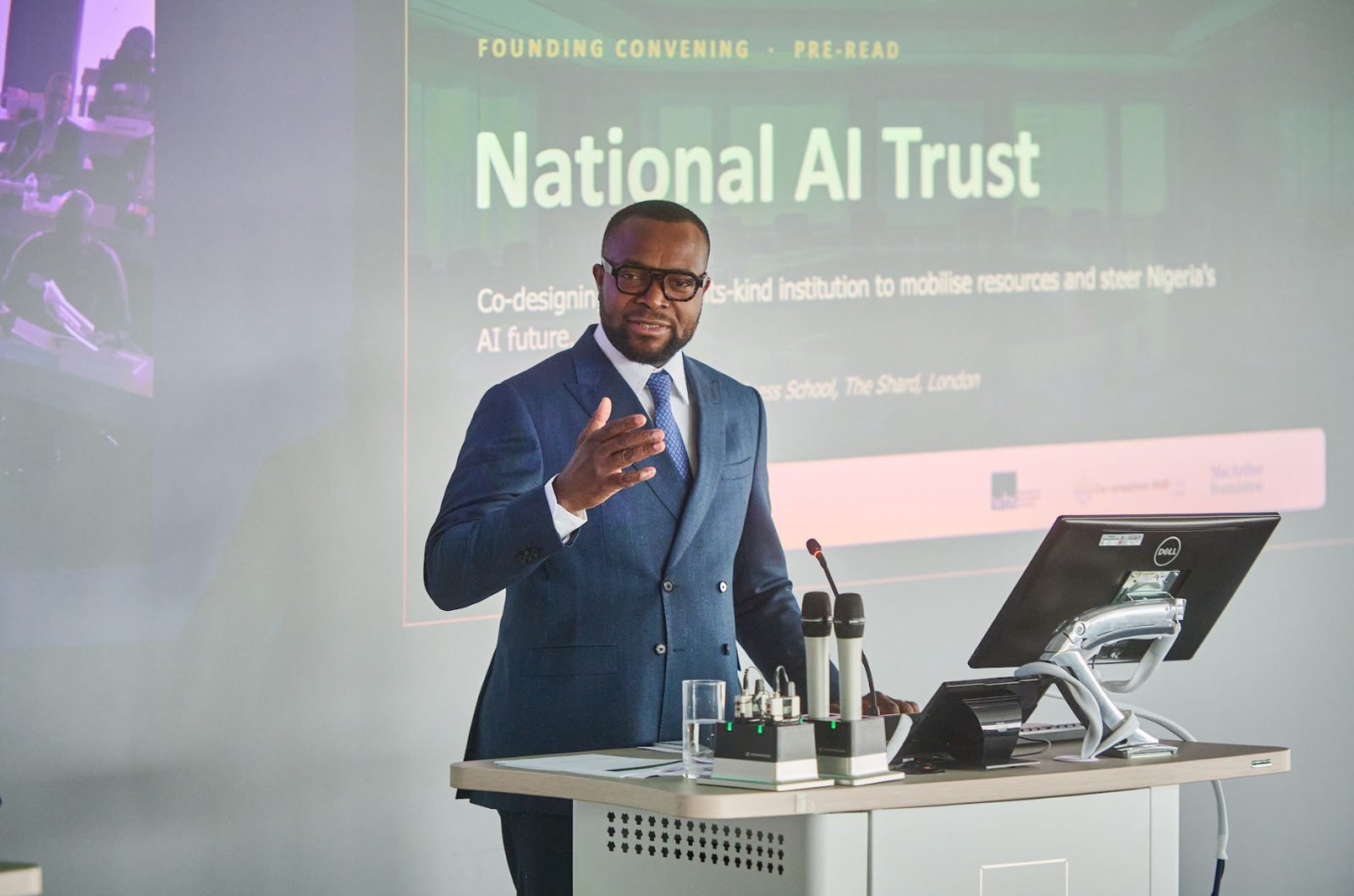
Nigeria has officially emerged as Africa’s highest ranked country in the latest Global Index on Responsible AI, overtaking Egypt and Kenya after climbing 42 places globally within a two-year period. The nation rose from 80th position globally to 38th with an overall score of 45.93.
This ranking arrives as African nations compete to attract artificial intelligence investment. Estimates project that artificial intelligence will contribute roughly 1.2 trillion dollars to the economy of the continent by 2030, which would boost gross domestic product by 5.6 percent. This top position strengthens the appeal of Nigeria as a primary destination for technological talent, innovation and capital.
The index is published by the Global Center on AI Governance, an independent research and policy think tank based in Cape Town. It evaluates 135 countries across five main pillars which include inclusion and diversity, ethics and sustainability, labour and skills, trust and safety alongside public service utilization.
The advancement of Nigeria coincides with a global race among governments to establish governance frameworks that keep pace with rapid technological evolution. Data from the Stanford Institute for Human-Centered AI indicates that global corporate investment in artificial intelligence almost tripled from approximately 200 billion dollars in 2023 to 581.7 billion dollars in 2026. Furthermore, 53 percent of the global population has utilized generative artificial intelligence tools.
Despite rapid adoption across the globe, the report notes that public governance capacity remains weak. Average index scores stand at only 35 out of 100 globally. Evidence of actual implementation exists in just 55 percent of countries that possess responsible frameworks, and that figure drops to 45 percent across the Global South.
The upward trajectory of Nigeria reflects deliberate policy initiatives to fortify the local technology ecosystem. The Federal Ministry of Communications, Innovation and Digital Economy has accelerated work on the National Artificial Intelligence Strategy, expanded digital public infrastructure, invested in digital skills, developed governance frameworks for emerging technologies and strengthened international partnerships to ensure safe deployment.
According to statements from the ministry, this recognition validates deliberate efforts to build an ecosystem that is inclusive, responsible and aligned with national development priorities. The current administration remains focused on creating the infrastructure, talent and policy environment necessary to enable these technologies to deliver real value for citizens while supporting the vision of a 1 trillion dollar economy.
The report specifically singled out Nigeria as a global bright spot for combining skills development with safeguards for children and vulnerable groups. The index notes that the country is among the few African nations attempting to simultaneously prepare citizens for an automated future while strengthening protections against the risks posed by emerging technologies.
Special emphasis was placed on the National Artificial Intelligence Strategy, which mandates literacy programmes, teacher training and broader capacity building initiatives. The report also cited the flagship 3 Million Technical Talent programme for delivering structured machine learning training through a hybrid model designed to reach young people nationwide.
On the regulatory front, the index recognized the Nigeria Data Protection Act and the General Application and Implementation Directive 2026 for introducing enhanced safeguards for the personal data of minors. These measures include parental consent requirements and strict limitations on decisions based solely on automated processing. The report states that these initiatives position the country as an example of how governments can pursue technology adoption without overlooking digital rights.
This recognition builds on other recent gains in international assessments. The country previously climbed 31 places in the Oxford Insights Government AI Readiness Index, moving from 103rd to 72nd globally, which reflects measurable improvements in policy readiness and institutional capacity.
The findings also point to broader progress across developing countries. Since the inception of the index, Global South nations have increased the number of responsible technology topics covered by national frameworks by 83 percent, compared with 35 percent in developed economies. However, most of these frameworks remain non binding, which highlights a persistent gap between policy development and actual implementation.