

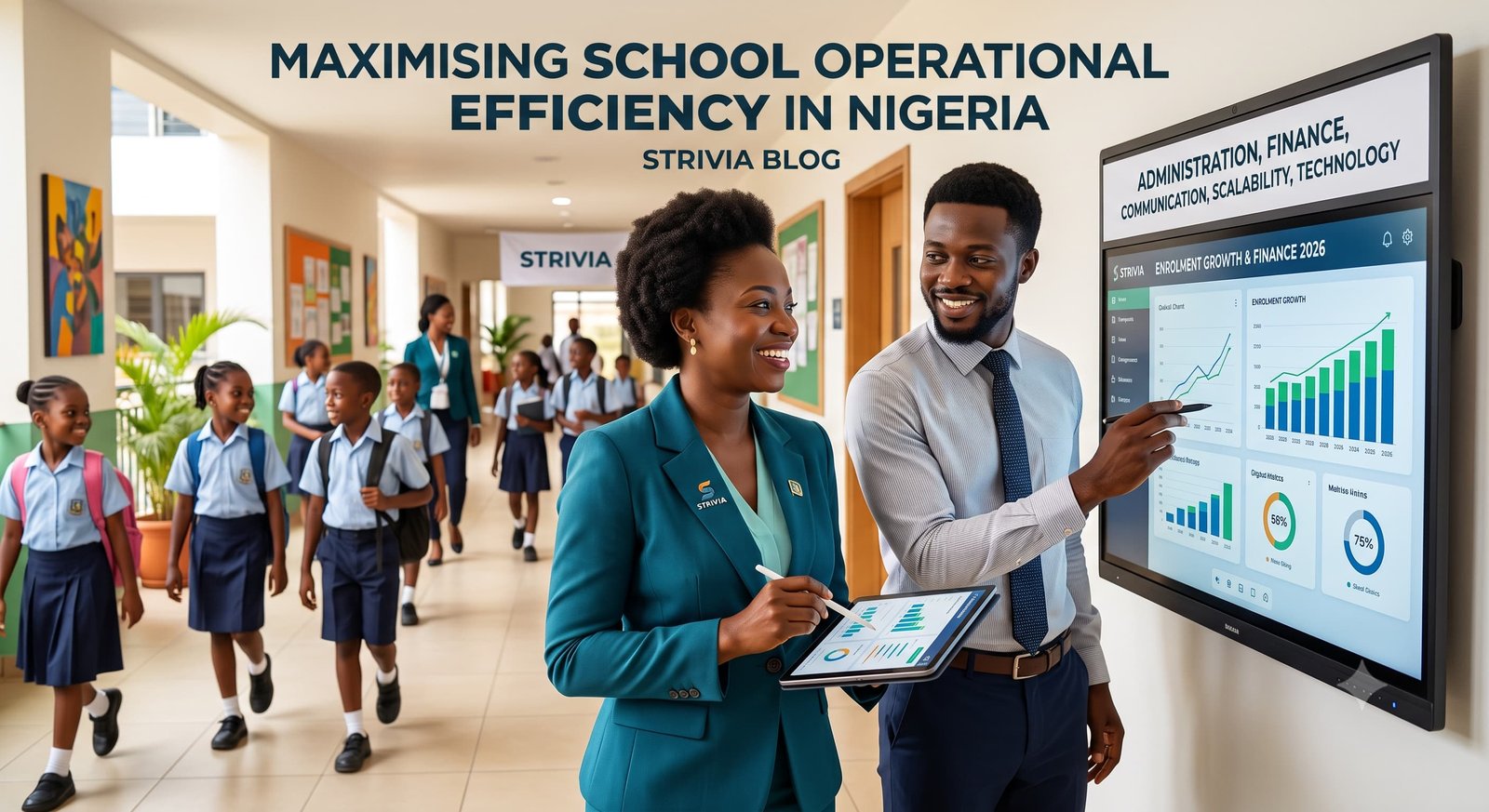
Ten Practical Strategies for Educational Leaders
Running an educational institution in Nigeria requires balancing academic excellence with complex administrative demands. Many school owners and administrators start their journeys out of a passion for nurturing students, not a desire to manage paperwork. However, between admissions, fee collection, payroll management, parental engagement, and regulatory requirements, institutional leaders often find themselves managing business operations rather than focusing on education.
This is a common challenge across Nigeria. School leaders face rising operational costs, demands for faster communication, and the need to support teaching staff while maintaining financial sustainability. In 2026, the most successful educational institutions will not necessarily be the largest, but rather the ones operating with the highest level of efficiency. True efficiency means building sustainable systems that support institutional growth without increasing administrative stress.
1. Centralise Institutional Data
Many schools operate with fragmented systems where admissions are managed in one department, student records in another, fee payments on a spreadsheet, and parental communication on messaging apps. This scattered approach increases the likelihood of data errors and forces staff to spend valuable time searching for information. Integrating all operations into a single school management system keeps student records, financial data, and reporting organised and accessible, allowing teams to focus entirely on education.
2. Introduce Flexible Tuition Payment Structures
Outstanding school fees present a major threat to institutional cash flow. In many cases, delayed payments do not stem from a refusal to pay, but rather from parents balancing tuition with other pressing financial obligations like rent and transportation. Providing flexible payment options allows families to spread tuition fees into manageable instalments. This approach reduces financial pressure on parents while ensuring schools receive a more predictable and healthy cash flow.
3. Maintain Real Time Financial Visibility
Waiting until the end of a month or term to assess financial health can prevent school leaders from catching critical issues early. Efficient institutions monitor income, outstanding fees, and expenses in real time. Access to precise financial data simplifies the budgeting process, strengthens strategic planning, and empowers school owners to make confident, proactive decisions.
4. Ensure Reliable and Automated Payroll
Staff morale is directly tied to accurate and timely compensation. Relying on manual payroll calculation wastes administrative time and increases the risk of errors that can damage trust. Automating the payroll process enables institutions to process salaries faster, generate payslips instantly, and maintain precise financial records with minimal effort.
5. Prioritise Teacher Professional Tools
Upgrading classrooms and facilities is essential, but investing in teaching staff is equally critical. Modern educators require dependable devices to plan lessons, access digital resources, and manage assessments. Establishing programmes that help teachers acquire quality laptops through affordable financing options ensures educators can teach confidently in an increasingly digital landscape, which directly benefits student outcomes.
6. Optimise Parental Communication
Consistent and structured communication builds trust and minimises misunderstandings between a school and its community. Parents appreciate timely updates regarding fees, events, and academic progress. Communication should be proactive and embedded into the institutional culture rather than occurring only when issues arise.
7. Conduct Termly Process Reviews
Operating a certain way simply because it is traditional can hinder institutional progress. School leaders should evaluate their administrative workflows every term to identify time-consuming tasks, staff complaints, or parental frustrations. Small, consistent adjustments to existing processes can lead to significant improvements in overall productivity.
8. Implement Data Driven Decision Making
Successful educational institutions rely on verifiable data rather than assumptions. Tracking student enrolment trends, attendance patterns, fee collection rates, and operational costs helps administrators identify critical trends early. Clear data insights allow leaders to make informed choices that promote sustainable institutional growth.
9. Construct Scalable Management Systems
Administrative workflows designed for one hundred students often fail when an institution grows to five hundred students. Growth should be an exciting milestone rather than an overwhelming burden. Establishing scalable digital systems early ensures that an institution remains prepared for future expansion without operational disruption.
10. Realign with the Core Educational Mission
It is easy to get caught up in daily administrative duties and lose sight of the original institutional vision. Technology exists to eliminate repetitive manual tasks so that educators can focus on what matters most. Every hour saved on administrative work represents more time dedicated to supporting teachers, engaging parents, and enhancing the learning experience for students. When educational institutions operate efficiently, school leaders, teachers, parents, and students all benefit.